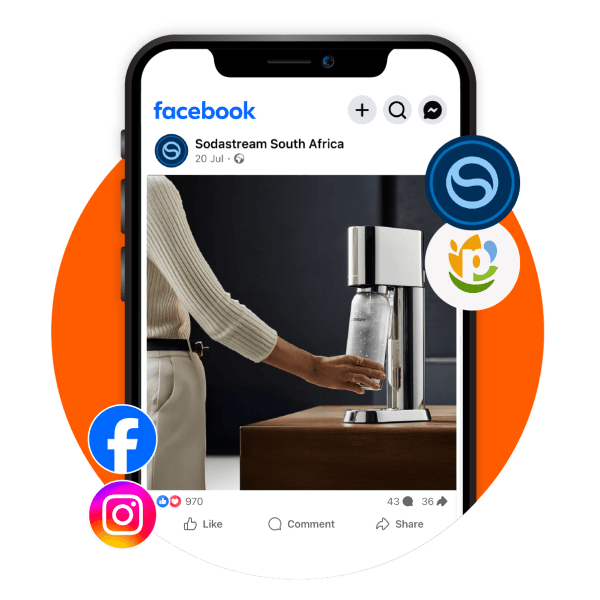
Sodastream reached more than 860 000 people across two months and the average person saw the ad fewer than twice, because the campaign was built to move between two audiences rather than exhaust one.
Why it worked
- Two audiences, two jobs.
The bigger audience brought the volume, while the smaller one, made up of people who already buy in the category, brought better quality traffic, turning more of its clicks into real page visits and costing less for each one. Neither audience was asked to do the other’s job, which is why both did their own well. - Room to move.
When a campaign runs on a single audience it eventually reaches everyone in it and starts showing the same people the ad again, which is usually why month two costs more and delivers less. Having a second, much larger audience meant Sodastream always had new people to reach. - Purpose beat product.
One ad about replacing plastic bottles drove 87% of all the traffic, and each of those visits cost 30% less than the campaign average. Knowing what people buy tells you who to talk to, but they still need a reason to care, and sustainability gave them one that product messaging did not.
The takeaway
What made this campaign work was not any single number but the decision to stop asking one audience to deliver both scale and efficiency, and to use two audiences with different jobs instead. Reach and efficiency only compete for the same budget when there is one audience carrying both objectives.
That kind of structure is only available to a marketer who knows what signals each audience is built from, and is only practical when those audiences can be bought together.